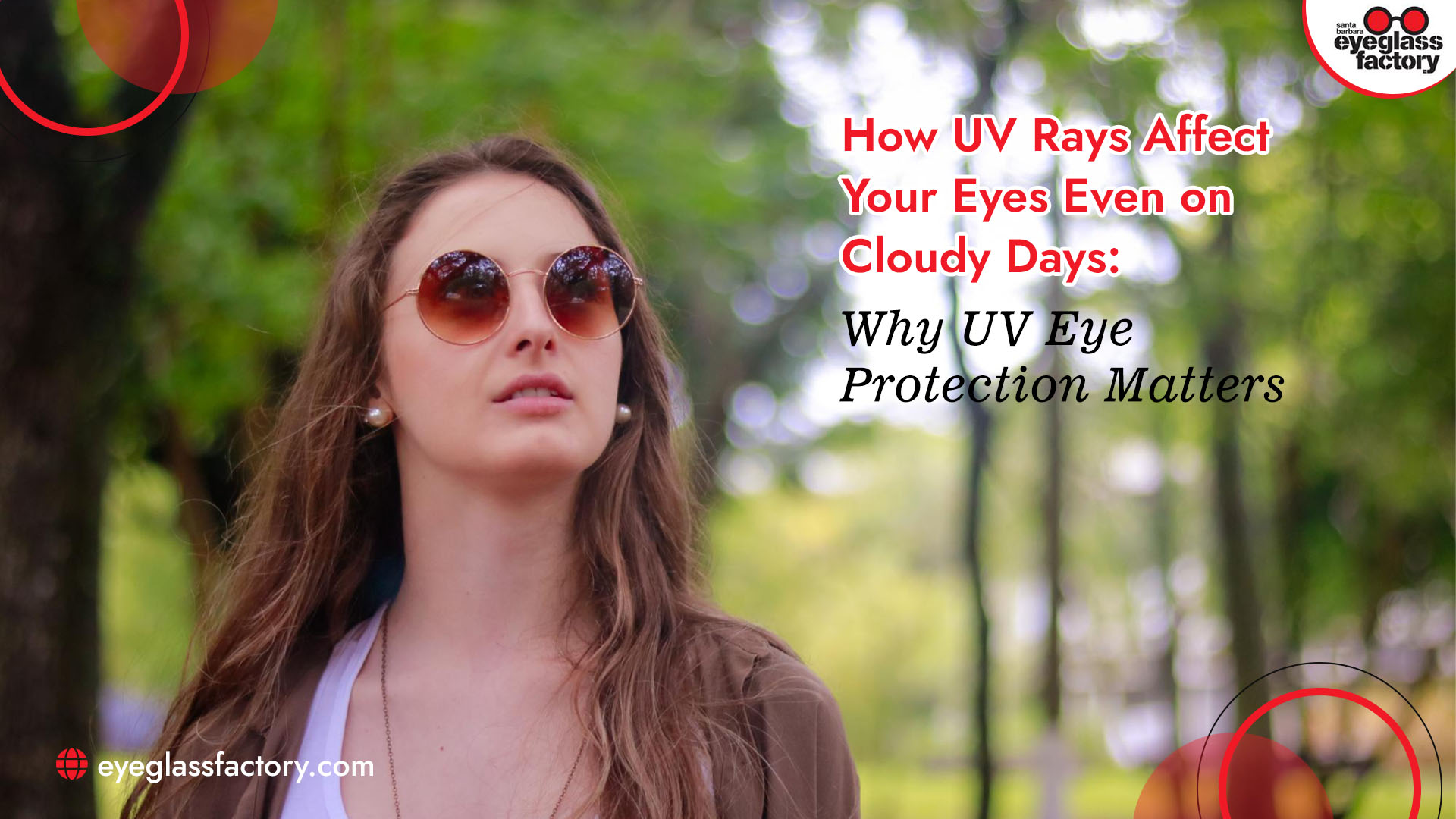
Sunglasses can seem irrelevant on cloudy days. After all, if there isn’t any bright sunlight for you to block out with glasses, what kind of UV rays can reach your eyes?
You will probably find this surprising: Clouds help to decrease UV radiation; however, they do not stop all UV radiation. Therefore, you are at risk for being exposed to UV radiation on cloudy and/or overcast days. If your eyes are exposed to UV radiation repeatedly over an extended period of time, then you could potentially develop issues with your eyes and/or eyelids. As such, it is important to protect your eyes from UV radiation even if the sun does not seem to be shining brightly.
You will be able to safeguard your sight during the course of each year by gaining a thorough understanding of the ways that ultraviolet (UV) radiation damages your eyes and, therefore, which types of eyewear provide adequate protection from this type of damage.
What Are UV Rays?
The primarily solar produced electromagnetic radiation that is not visible to the human eye, is ultraviolet radiation. There are three types of ultraviolet radiation: UVA, UVB, and UVC.
UVA radiation reaches the Earth’s surface and can penetrate deeper into tissue.
UVB rays are partially blocked by the atmosphere; however they do pass through to the Earth’s surface and can potentially damage both your skin and eyes.
Normally, ultraviolet (UVC) radiation emitted by the sun is filtered out of our environment by the Earth’s atmosphere so that none reaches the Earth.
You will likely underestimate how much UV radiation you have been exposed to — especially during periods of cool weather or with cloud cover — because you cannot physically perceive or experience UV radiation.
The UV Rays of the sun are able to pass through the clouds even when it is overcast.
Clouds don’t block all of the UV rays
Factors like the type and thickness of clouds, the time of day, the season, the altitude, and where you live in the world will determine how much UV radiation reaches the surface of the Earth. So even though the sky is grey, there may be UV radiation reaching your skin.
The ultraviolet radiation can enter your eyes directly as well as through indirect means by being reflected off various types of surfaces, including water, sand, pavement, and snow.
Therefore, UV eye protection can be worn year-round and not just during the bright hours of a summer day.
How Can Ultraviolet Radiation Damage Your Eyes?
The human eye is susceptible to damage from UV radiation. Many parts of the eye can take on UV energy; as such, if you repeatedly expose your eyes to UV radiation, you run the risk of causing damage to your eye’s tissues. Short-term exposure to extremely high levels of UV radiation may result in photokeratitis, which is often referred to as “sunburn” of the eyes. This condition will likely produce symptoms such as pain, red eyes, excessive watering, sensitivity to bright lights, and the feeling that something is in your eye.
Because UV radiation increases the risk of developing many different types of eye diseases and/or eyelid diseases, it is more alarming when someone is exposed to the Sun for extended periods of time.
Therefore, reducing the amount of UV exposure you receive will help preserve the health of your eyes over the course of time.
Many people are unaware that UV exposure can cause eye problems.
Exposure to UV radiation is linked to various types of eye disease.
Cataracts
Cataracts develop as a result of clouding of the typically clear lens in the eye. Long-term exposure to ultraviolet light has been identified as a possible risk factor for developing cataracts.
Photokeratitis
Photokeratitis can occur from a very short duration of intense ultraviolet (UV) radiation. The symptoms of this condition typically take some time to develop, but when they do, they often include pain in the eye, swelling or redness around the eye, excessive tearing, poor vision, and a severe reaction to light.
Pterygium
The pterygium is an abnormal growth of tissue that forms on the outer layer of the eyeball; it may spread onto the clear part of the eye (the cornea). It appears to be linked to long-term exposure to ultraviolet light from the sun, as well as to other environmental factors such as wind and dust.
Eyelid/Surrounding Skin Damage
The skin that surrounds your eye is very thin and sensitive. UV rays from the sun can also harm that skin, so having sunglasses that fit well will help protect it.
Although protective eyewear will not completely eliminate all risks associated with eye health; it is possible to reduce the amount of ultraviolet light (UV) that you are exposed to by wearing protective eyewear, which can be an effective way to help prevent some of the issues related to eye health.
Why Cloudy Days Can Still Put Your Eyes at Risk
One reason cloudy weather can be deceptive is that people often change their behavior.
On bright days, you may instinctively reach for sunglasses. When it is cloudy, you may spend hours outside without thinking about UV protection.
However, ultraviolet radiation is not the same thing as visible brightness or heat. A cool, cloudy day does not automatically mean UV levels are insignificant.
Exposure can also increase through reflection from water, sand, snow, and other surfaces. Checking the local UV Index can give you a better idea of the day’s UV intensity than simply looking at the sky.
Who Is More Vulnerable to UV-Related Eye Damage?
Everyone can benefit from protecting their eyes, but some people should pay particular attention.
Children
Children often spend considerable time outdoors, and their eyes are still developing. Building good sunglass habits early can help reduce cumulative lifetime exposure.
People Who Spend Significant Time Outdoors
Athletes, outdoor workers, hikers, drivers, beachgoers, and others who regularly spend time outside may experience greater cumulative exposure.
People at Higher Altitudes
UV exposure generally increases with altitude, making protective eyewear especially important in mountainous areas.
People Around Reflective Surfaces
Water, sand, and snow can reflect UV radiation and increase overall exposure to the eyes.
Anyone concerned about previous UV eye damage or unusual vision symptoms should discuss their concerns with an eye care professional.
Do Your Eyes Need UV Protection All Year Round?
Yes. UV exposure is possible throughout the year, not just during summer.
Winter conditions can sometimes produce significant exposure, particularly when sunlight reflects from snow. Spring and fall also bring days when the weather feels mild but UV levels may still warrant protection.
Rather than judging by temperature or cloud cover, consider UV-protective eyewear part of your regular outdoor routine.
How to Protect Your Eyes From UV Rays
Protecting your eyes does not need to be complicated.
Start with sunglasses that block 99% to 100% of UVA and UVB radiation or are labeled UV400. Larger or wraparound frames can provide additional protection by limiting rays that enter from the sides.
A wide-brimmed hat can provide additional shade but should complement rather than replace UV-protective sunglasses.
If you require corrective lenses, prescription sunglasses can make protection more convenient. Some optical providers may offer 1-hour prescription sunglasses for eligible prescriptions, depending on available lens materials and in-store capabilities.
How to Choose the Right UV-Protective Sunglasses
When buying sunglasses, UV protection should be your first priority.
Look for eyewear labeled:
- UV400, or
- 99% to 100% UVA and UVB protection
Do not assume darker lenses automatically provide greater UV protection. Lens darkness controls visible light, while UV protection depends on the lens material and treatment.
It is also important to understand UV vs polarized lenses. UV protection blocks harmful ultraviolet radiation, while polarization primarily reduces glare reflected from surfaces such as water and roads.
A quality pair of sunglasses can provide both features, but polarization alone does not automatically guarantee adequate UV protection.
When choosing the best sunglasses store, look for knowledgeable staff who can explain lens protection, polarization, prescription options, frame fit, and coverage rather than focusing only on appearance.
When Should You See an Eye Doctor?
Regular eye examinations are important because some eye conditions may develop without obvious early symptoms.
You should also seek professional evaluation if you experience:
- Persistent eye pain
- Unusual sensitivity to light
- Ongoing redness or tearing
- Blurred or changing vision
- Sudden changes in vision
- New or unusual visual symptoms
After intense UV exposure, significant pain or light sensitivity deserves prompt attention.
If it has been a while since your last comprehensive evaluation, you can book an eye exam to check your vision and overall eye health.
FAQs About UV Rays and Eye Health
Can UV rays damage your eyes on cloudy days?
Yes. Clouds may reduce UV radiation, but they do not block it completely. Your eyes can still be exposed on cloudy and overcast days.
Do clouds block UV radiation?
Clouds can reduce the amount of UV reaching the Earth’s surface, but the level varies considerably depending on cloud thickness and atmospheric conditions. Some UV radiation can still pass through.
Should I wear sunglasses when it’s cloudy?
Wearing UV-protective sunglasses can be beneficial whenever UV exposure is meaningful, even when the sun is hidden behind clouds. Checking the UV Index can help you decide when additional protection is appropriate.
Can UV exposure cause cataracts?
Long-term UV exposure is recognized as a risk factor for cataracts. Protecting your eyes from UV radiation may help reduce cumulative exposure over your lifetime.
What does UV400 mean on sunglasses?
UV400 indicates that the lenses are designed to block ultraviolet wavelengths up to 400 nanometers, covering UVA and UVB radiation.
Do polarized sunglasses provide UV protection?
Not necessarily. Polarization and UV protection perform different functions. Polarized lenses reduce glare, while UV-protective lenses block ultraviolet radiation. Look for sunglasses that specifically state they provide UV400 or 99% to 100% UVA and UVB protection.
Are children’s eyes more sensitive to UV rays?
Children deserve particular attention to UV protection because they may spend significant time outdoors and accumulate UV exposure from an early age. Properly fitted UV-protective sunglasses and hats can help protect their eyes.
Can car windows protect your eyes from UV rays?
Vehicle glass can reduce UV exposure, but protection varies depending on the type of glass and window. Windshields generally provide substantial UV protection, while side windows may allow more UVA through. UV-protective sunglasses can provide additional protection while driving.
Conclusion
Cloudy skies can create a false sense of protection. Even when sunlight does not look intense, ultraviolet radiation can still reach your eyes and contribute to cumulative exposure.
Consistent UV eye protection is a simple way to help protect your eyes throughout the year. Choose sunglasses that provide 99% to 100% UVA and UVB protection or UV400 coverage, consider frames that offer good coverage around the eyes, and remember that polarization and UV protection are not the same thing.
Whether you are driving, spending a day at the beach, walking outdoors, or simply going about your daily routine, protecting your eyes should not depend solely on whether the sun is visible.
And if you have concerns about your vision or eye health, book an eye exam with a qualified eye care professional. Protecting your eyes today is an important investment in maintaining healthy vision for years to come.