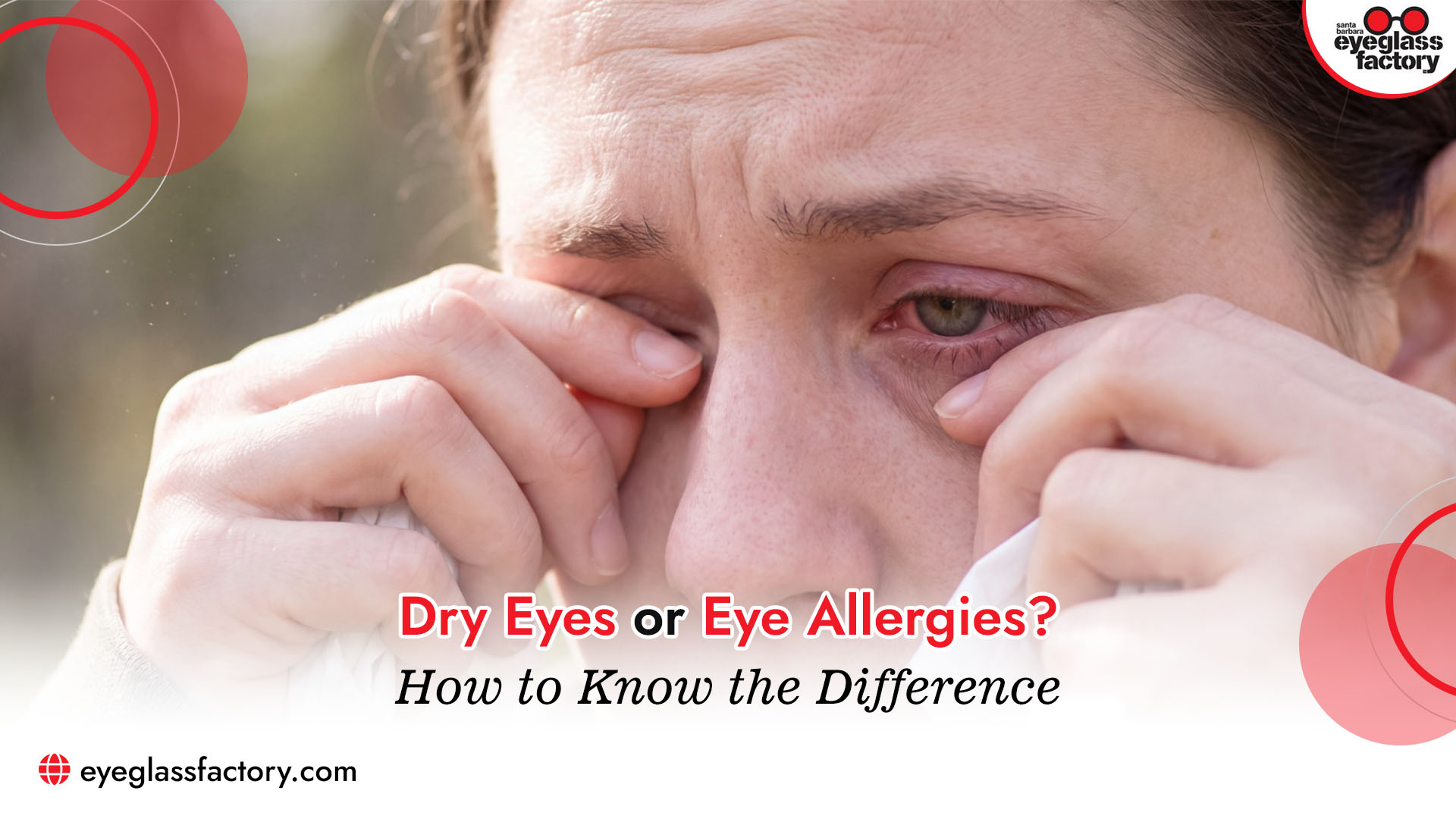
When your eyes are red, watery, and persistently itchy and uncomfortable, most people cannot figure out what exactly is wrong. Is it dry eyes? Or an allergy? Both conditions can cause red, watery, burning eyes and overall discomfort, so they are easily confused.
Understanding the differences between dry eyes vs eye allergies can help you grasp the key details that set them apart. If your eyes are unbearably itchy, it is most likely an allergy; the typical sensations of dry eyes are a burning, gritty feeling in the eyes, blurry or fluctuating vision, or discomfort that worsens after staring at a screen for a long time.
Next, we will teach you how to distinguish between these two conditions and when you should see a professional eye doctor.
What Is a Dry Eye?
Simply put, you develop dry eyes when your eyes cannot produce enough tears, or the tear film that covers the surface of the eyeball is unstable and evaporates too quickly.
Healthy tears contain more than just water; they also have oils, mucus, and other components. These substances work together to keep the surface of the eyeball properly lubricated, preventing it from becoming dry and painful. Once this balance is disrupted, your eyes will start to feel uncomfortable.
Many common triggers can lead to dry eyes: advancing age, which naturally reduces the eyes’ secretory function; taking certain medications that affect tear production; regularly wearing contact lenses; staring at digital devices such as phones and computers for long periods; being in an environment with too low humidity; exposure to wind; spending long hours in air-conditioned rooms; or problems with the glands in the eyelids or eyes that secrete oils, all of which can cause dry eyes.
People experiencing contact lens dry eyes may notice that their lenses become less comfortable as the day progresses.
What Are Eye Allergies?
Eye allergies, also called allergic conjunctivitis, occur when your immune system mistakes otherwise harmless substances for invading allergens and triggers a rejection reaction.
Common allergens include pollen, dust mites, pet dander, mold, and certain cosmetics. As soon as the eyes come into contact with these allergens, the immune system activates its defenses, leading to symptoms of itchy, red, puffy, and constantly watery eyes.
Allergic reactions also vary from person to person: some people only experience outbreaks during specific allergy seasons, while others are allergic to year-round indoor allergens and are plagued by allergy symptoms all year long.
Dry Eyes and Eye Allergies: Key Differences
It is true that the symptoms of the two overlap in many ways, but there are also easy-to-remember distinguishing points that can help you sort out your condition gradually.
Dry eyes are most often accompanied by these issues:
- A burning or stinging sensation
- A gritty feeling like there is sand in the eye
- Fluctuating or temporarily blurry vision
- Tired eyes
- Discomfort wearing contact lenses
Eye allergies are most often accompanied by these issues:
- Severely itchy eyes
- Constant tear production
- Swollen, red eyelids
- Symptoms that only appear after exposure to an allergen
Beyond the symptoms themselves, the timing of when symptoms appear can also help you make a judgment. Discomfort after several hours at a computer may point toward dryness or screen-related eye strain; if you develop symptoms right after going outdoors and being exposed to pollen or touching your pet at home, it is probably an allergy.
Symptoms of Dry Eyes
Common symptoms of dry eyes include:
- A burning or stinging sensation
- Red eyes
- A gritty, foreign-body sensation in the eye
- Watery eyes
- Blurry or fluctuating vision
- Light sensitivity
- Tired eyes
- Discomfort wearing contact lenses
At this point, some people may wonder: this sounds contradictory. How can dry eyes even produce tears? In fact, this happens when the surface of the eye is irritated, and the body urgently secretes reflex tears to try to flush out the irritant with a large volume of fluid. But these temporarily produced tears have an unbalanced composition and cannot provide the continuous lubrication the eyes need, so even with constant tear production, you will still feel dry.
Symptoms of Eye Allergies
Eye allergies can cause:
- Persistent or intense eye itching
- Red, bloodshot eyes
- Constant, heavy tear production
- Swollen eyelids
- A burning sensation
- Mild light sensitivity
- Watery or stringy discharge from the eyes
Allergies rarely affect only the eyes; they are most often accompanied by nasal allergy symptoms, such as constant sneezing, a stuffy nose, and a runny nose. This is another small detail that can help you distinguish between allergies and dry eyes.
The Biggest Clue: Are Your Eyes Itchy?
When distinguishing between dry eyes and eye allergies, whether your eyes itch is one of the most useful signals, and it can help you rule out most cases of confusion.
If your eyes are unbearably itchy, it is almost always an allergic reaction. Dry eyes may occasionally cause mild itching or discomfort, but their defining symptoms are always burning, gritty, tired eyes and never the intense, uncontrollable urge to rub your eyes that comes with allergies.
Beyond whether your eyes itch, you should also judge based on when symptoms appear. If you start feeling uncomfortable after several hours of using a screen, it is most likely that you were so focused while looking at the screen that you blinked less often, leading your tears to evaporate too quickly and dry out your eyes; if you spend time outdoors during pollen season and your symptoms suddenly worsen when you get home, it is almost certainly an allergy.
If you cannot identify the cause and symptoms continue, see an optometrist for an appropriate evaluation.
Can You Have Dry Eyes and Eye Allergies at the Same Time?
Yes, it is entirely possible for both conditions to affect you at once; having dry eyes does not mean you cannot develop an allergy, and vice versa.
Inflammation caused by allergies can disrupt the stability of the eye’s surface and tear film, and dry eyes will make the already irritated eyes from allergies even more uncomfortable, piling one problem on top of another. Some medications used to relieve allergy symptoms may also make some people’s eyes drier, and under this double impact, the discomfort becomes especially noticeable.
For contact lens wearers, developing both conditions at the same time is particularly miserable. You already deal with the discomfort of dry eyes from wearing contacts, and during allergy season, these uncomfortable feelings become even more pronounced, making it difficult to even wear your lenses normally to go out.
What Triggers Dry Eyes and Eye Allergies, respectively?
Understanding the triggers of each condition makes it easier to figure out what is wrong with your eyes, so you do not have to guess based on symptoms alone.
Triggers of Dry Eyes
Common ones include prolonged screen use, wearing contact lenses, exposure to wind, being in a smoky environment, low humidity, air conditioning, indoor heating, and taking certain medications.
Many people now discuss the link between blue light and dry eyes, but blue light itself is not the main cause of dry eyes from screen use. The real reason is that long screen time changes your blinking habits: blinks that should be complete become half-hearted, partial blinks, which makes tears evaporate faster, leading to screen-related eye strain.
Triggers of Eye Allergies
Common allergens include pollen, dust mites, mold spores, pet dander, and certain cosmetics.
If you keep a record of when and where your symptoms appear, for example, noting that your eyes started feeling uncomfortable after being in a certain place on a specific date, it can help your eye doctor identify potential triggers much faster, without having to rule out possibilities one by one.
How Are Dry Eyes and Eye Allergies Diagnosed?
A professional eye doctor will not make a hasty judgment just because you say your eyes hurt. They will carefully ask about your symptoms, medical history, and current medications, then conduct a comprehensive exam of your eye health to piece together the real cause of your discomfort step by step.
If the doctor suspects you have dry eyes, the exam will include assessing your tear film, eyelids, cornea, blinking habits, and the oil-secreting glands, checking every link that could potentially be problematic one by one.
If an allergy is suspected, the doctor will first look for signs of inflammation caused by allergies and also ask you what environmental substances you have been exposed to and if you have symptoms that only appear during specific seasons, to use this information to pinpoint the allergen.
If recurring redness, watering, or discomfort is affecting your daily life, it may be better to book an eye exam rather than repeatedly trying different products without knowing the underlying cause.
Treatment methods for Dry Eyes
How to treat dry eyes depends on the trigger and severity of your condition, and everyone’s treatment plan will not be exactly the same. Common methods include:
Using artificial tears: These are eye drops that lubricate the eyeball, helping to make up for the shortcomings of your natural tear film and relieve the discomfort of dryness.
Adjusting your screen use habits: Take regular breaks when using digital devices instead of staring nonstop, and make a point to blink fully several times more often so your tear film can replenish moisture in time.
Adjusting your environment: Do not let the wind from fans or air conditioners blow directly into your eyes, as wind accelerates tear evaporation; if your room is too dry, use a humidifier to raise the ambient humidity.
Adjusting your contact lens wear: Your doctor may recommend switching to a different lens material, changing your daily wear time, or updating your care routine to find a lens-wearing method that works for you.
Persistent dry eyes that do not improve may require professional treatment to address eye inflammation, eyelid problems, or meibomian gland dysfunction, resolving the root cause of insufficient tear production.
Treatment methods for Eye Allergies
Controlling allergies generally requires two things: avoiding known allergens as much as possible and suppressing your body’s allergic reaction. Common methods include:
Steer clear of allergens whenever possible: if you know what substances cause you discomfort, limit your exposure to them.
Do not rub your eyes: rubbing will only worsen the allergic inflammation, so you must resist even if the itching is severe.
Apply a cool compress to your eyes, which can slightly relieve the discomfort of itching and swelling.
Use lubricating eye drops to flush allergens off the surface of the eyeball, reducing the irritant effect of the allergens on your eyes.
Use appropriate allergy eye drops as prescribed by your doctor; do not buy and use them on your own.
It is important to note that not all red, watery eyes are caused by allergies, so do not keep using allergy eye drops without knowing the cause; untargeted medication will only harm your eyes.
When should you see an eye doctor?
If you only experience occasional, mild discomfort, it may improve with proper at-home care, but if your symptoms persist or even worsen, you should see a professional doctor and do not tough it out.
If you experience any of these situations, book an appointment with a doctor right away: recurring red eyes, frequent itching or burning in the eyes, blurry vision, increasing discomfort when wearing contact lenses, noticeable light sensitivity, or symptoms that do not improve.
There are also emergency situations that cannot be delayed: if you experience sudden vision changes, blindness, severe eye pain, an eye injury, or a sudden worsening of symptoms, go to the hospital immediately; these may be signs of a more serious eye disease.
If you cannot tell if you have dry eyes, an allergy, or another eye problem, do not self-diagnose; see an optometrist to help you judge, as a professional exam is far more reliable than your own guesses.
Dry eyes or allergies? Quick Takeaway
To wrap up, we have put together a simple, easy-to-remember way to distinguish them, which you can match to your situation to sort out most cases:
Dry Eyes: Most often cause a burning sensation, gritty foreign-body feeling, tired eyes, and fluctuating vision, and symptoms are linked to screen use, contact lens wear, wind exposure, or being in a dry environment.
Eye Allergies: Most often cause intense eye itching, watery eyes, red eyes, and puffy eyelids, and symptoms are linked to allergens such as pollen, dust, and pets.
After all, both conditions can occur at the same time, so persistent symptoms must be evaluated by a doctor. You can book an eye exam to find out exactly what is making your eyes uncomfortable and get targeted treatment as soon as possible.
Frequently Asked Questions
How can I tell if I have dry eyes or an allergy?
Severe itching is mostly linked to allergies, while burning, gritty eyes, fluctuating vision, and discomfort after screen use are more common with dry eyes. If your symptoms overlap and you cannot tell them apart, you may need an eye exam to get a professional diagnosis.
Can allergies make dry eyes worse?
Yes. Inflammation caused by allergies can damage the surface of the eyeball and the tear film, which may make your eyes drier and more uncomfortable; the discomfort of having both conditions is far more intense than having just one.
Why do my eyes water even though they are dry?
Dry eyes irritate the surface of the eyeball, triggering a physiological reflex to produce tears. These tears have an unbalanced composition and cannot provide long-lasting lubrication, so even with constant tear production, your eyes will still feel dry.
Can dry eyes cause itchy eyes?
Dry eyes may occasionally cause mild itching, but intense, persistent eye itching is almost always a characteristic of eye allergies and will not occur with ordinary dry eyes.
Can I use allergy eye drops to treat dry eyes?
Allergy eye drops are made to treat allergy symptoms, and they are not necessarily suitable for dry eyes. You should ask your eye doctor before using any eye drops, and do not misuse medication on your own.
How long do symptoms of eye allergies last?
It depends on what you are allergic to and how long you are exposed to it. Seasonal allergies only appear at specific times each year, while indoor allergens may cause persistent symptoms that will not go away as long as you keep being exposed to them.
When should I take red, itchy eyes seriously?
If your symptoms persist, are severe, are painful, or are accompanied by vision changes, noticeable light sensitivity, or abnormal discharge, you should see a doctor. If you experience sudden blindness or severe eye pain, go to the hospital immediately to avoid delaying treatment.
Conclusion
The symptoms of dry eyes and eye allergies may seem similar, but their triggers and treatment methods are completely different. Mixing them up will only make the situation worse the longer you wait, so seeing a professional doctor promptly when you have problems is the safest approach.