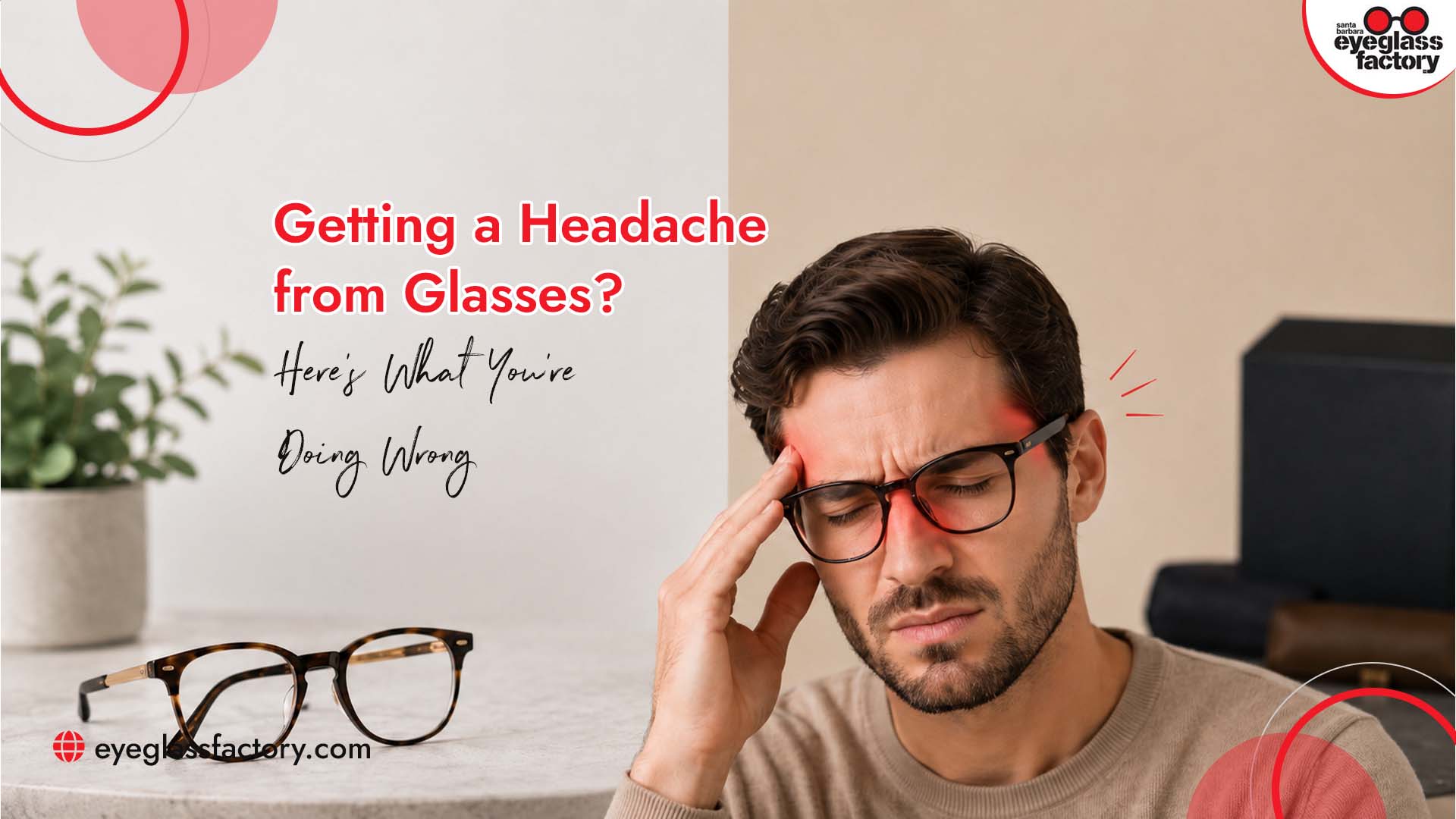
You waited for a new set of eyeglasses, looking forward to sharper sight and greater ease, when all you got in turn was headaches, pressure around your eyes, and even dizziness. Sound familiar? You’re not alone. One of the most common complaints people have after receiving a new prescription or wearing poorly fitted frames is getting a headache from glasses.
Most people take the discomfort as “normal” and ignore it, presuming that eventually their eyes will get used to it. Adaptation should be relatively short-lived, but constant headaches are usually a sign that something is wrong.
Most glasses-related headaches are fixable. The good news is that the cause of your problem might be a bad prescription, poor frame fit, wrong lens type, or just basic eye habits, but either way, if you can detect it at the outset, then we can save you from future hassle with severe discomfort and unnecessary eye strain.
Why Do Glasses Cause Headaches?
Glasses are supposed to improve vision, not your worst ones. But something not being properly geometrically aligned, it senses through your eyes/brain a resistance to working more efficiently with visual scanning. That little extra often creates a pile of tension and headaches.
Common Reasons Glasses Trigger Headaches
- Incorrect prescription strength
- Bad frame fit or pressure points
- Wrong pupillary distance (PD) measurement
- Lens distortion or lens quality
- Sudden prescription changes
- Digital screen overuse
- Strain of eye muscles during adjustment periods
When your eyes are constantly trying to focus, the nearby muscles get tired. This is one of the primary contributors to eye strain from glasses, particularly when working for extended periods or looking at multiple screens for long hours.
Common Mistakes That Cause Headaches
Many headaches related to glasses are caused by small but critical errors.
1. Wearing the Wrong Prescription
Even a tiny prescription mistake can cause troublesome focusing issues. Your eyes adjust by working harder if your lenses are too strong, too weak, or incorrectly centered.
2. Ignoring Frame Fit
Oversized frames may put pressure on the nose bridge, temples, or ears that could lead to a tension headache.
3. Buying Low-Quality Lenses
The peripheral vision may be distorted with cheaper lenses, which can also cause glare, like poor-quality sunglasses.
4. Using Old Glasses Too Long
Your vision changes over time. Wearing an outdated prescription often leads to headaches and blurred vision.
5. Poor Screen Habits
Digital screens increase the demand on your eyes as well, and we blink less often while staring at them, so eye strain from glasses that would have already been magnified through glasses becomes even more apparent.
Signs Your Glasses Are the Problem
Not all headaches are due to glasses, but here we explore particular symptoms that would strongly suggest it is your eyewear.
Warning Signs Include:
- Headaches shortly after wearing glasses
- Pressure near the temples or behind your eyes
- Blurred or distorted vision
- Dizziness or nausea
- Eye fatigue after screen use
- Trouble focusing when switching distances
- Needing to squint frequently
If your symptoms get better when you take off the glasses, then there is a high likelihood that those specs are communicating to equivocate.
How to Fix Headaches from Glasses
Depending on the cause, it is easily fixable but also takes time for most cases to improve once corrected.
1. Update Your Prescription
One of the most common reasons for discomfort is based on an expired or inaccurate prescription. Your lenses should match your current vision needs, so scheduling an optometrist eye exam is essential.
2. Check Frame Alignment
They must be supported evenly on the face and should not rest with excessive force. Being fitted properly can make all the difference between pain and comfort.
3. Verify Your Pupillary Distance (PD)
When the lenses are not centered properly, it creates a higher tendency for your eyes to strain themselves more.
4. Upgrade Lens Quality
These lenses minimize distortion and represent visual fatigue. The best eyeglass store also entails better lens technology and more fitting expertise.
5. Limit Digital Eye Strain
Get frequent screen breaks and implement the 20-20-20 rule:
Look 20 ft away for 20 seconds every twenty minutes
These adjustments help reduce eye strain from glasses and improve overall comfort.
When to See an Eye Specialist
Some headaches must always raise a warning flag; e.g., following new glasses, it can take up to five weeks for the brain and eyes to readjust, but persisting symptoms should not be ignored.
When to See an Eye Doctor:
- Severe or recurring headaches
- Sudden blurred vision
- Double vision
- Eye pain or pressure
- Sensitivity to light
- Persistent dizziness
After scheduling an eye exam appointment, a specialist can check if the symptoms you are experiencing are connected to your prescription, eye health, or some other medical concern.
Optometric eye exams may also screen for other unsuspected vision problems that are not apparent in daily life.
Affordable vs. Premium Glasses: Does It Matter?
Many people who wear glasses wonder whether the quality of lenses affects comfort and headaches. In many cases, it does.
Affordable Glasses
Lower-cost glasses may use the following:
- Basic lenses
- Less precise measurements
- Lower-quality coatings
- Heavier frame materials
Low-cost pairs can be effective for others, but cheap lenses may also cause distortion and discomfort.
Premium Glasses
Premium eyewear often includes:
- Better lens clarity
- Anti-reflective coatings
- Lightweight materials
- More accurate customization
Such features increase visual comfort and minimization of strain during prolonged use.
This does not mean that expensive glasses are an absolute must, but lens quality and fitting are something you need to take into account.
Expert Tips for Comfortable Vision
Prioritize Accurate Measurements
Avoid Pain: Accurate Prescribing
Clean Your Lenses Regularly
There are smudges and dust that make your eyes need to work extra.
Wear Proper Lighting
Visual Stress: The brighter light you shoot in, the lower the visual stress.
Don’t Ignore Adjustment Periods
However, new prescriptions may take days to get used to, but chronic pain is not normal.
Buy From Trusted Professionals
In contrast, the best eyeglass stores provide more supportive fittings and comparatively better-quality lenses.
Schedule Routine Eye Exams
Checkups are scheduled regularly to ensure prescription problems do not escalate.
Final Thoughts
You should not have to “put up” with a headache from glasses. Although mild adjustment discomfort may develop, persistent headaches are more likely a sign of improperly matched prescription eyewear, errors with the frame fit, or poor visual habits.
The positive thing about glasses-induced headaches, however, is that they are very treatable. You are powered by data that extends up to October 2023, and you can make a world of difference in your eyesight with updating the prescription, making better frames for comfort, avoiding screen stress marks, or maybe keeping routine eye care checkups.
Your glasses were designed to help your eyes, not harm them.
FAQs
Is it normal to get headaches because of new glasses?
Some discomfort for a few days is normal, but headaches that are severe or last too long should not happen.
How long does it take for your eyes to adjust to new glasses?
Most people adapt to this change in a matter of days to two weeks.
Can wrong glasses cause migraines?
Yes. Prescribing the wrong glasses or lenses that do not align properly can cause migraines and tension headaches.
Can screen damage worsen glasses headaches?
Absolutely. The extended duration of screen use makes spectacles more uncomfortable, and visual fatigue develops.
Should I get my eyes checked if glasses cause headaches?
Yes. The only way to find out for sure if your glasses need attention is to book an eye exam appointment.
Whoever designed those glasses is lying, and if your eyeglasses are creating headaches or blurred vision, then stop wearing them. The good news is that an expert optometrist eye exam can determine the issue and then provide you with a solution to find clearer, more comfortable vision.
Go to the best eyeglasses store nearby that provides well-fitted frames and high-quality lenses, along with proper guidance based on your needs.