If you close one eye and look at something far away, you may notice it looks blurry or unclear. But when you switch eyes, the same object may look sharper and easier to see. Many people don’t realize this, but it’s common for one eye to see better than the other.
This difference often happens slowly over time, so it’s easy to miss. Even small changes between your eyes can make them work harder than they should. This can lead to eye strain, headaches, or tired eyes.
Understanding why your vision feels uneven is an important step toward keeping both eyes healthy and seeing clearly every day.
When One Eye Sees Better Than the Other
People take it for granted that if their vision is “good enough,” then all must be well. Yet an unbalanced vision creeps in stealthily; your brain adapts, compensates, and hides the ailment, zooming through each eye sometimes even after many years. By the time discomforts, headaches, or fatigue start coming along, however, this dysfunction may already be disturbing normal life.
Seeking early help from an ophthalmologist can mean the difference between spotting uneven vision’s cause and preventing further problems.
What Does “Uneven Vision” Actually Mean?
“Uneven vision” is a term used by doctors to describe a definite difference in clarity, sharpness, or visual comfort between the person’s two eyes. This imbalance can appear through a variety of symptoms:
- One eye is clearer than the other
- It’s hard to focus with both eyes open
- You develop headaches or eye strain after reading or prolonged computer use
- Depth perception becomes more difficult
- You feel the need to close one eye while reading.
Printing is inked out in pigment precisely as your eyes work as a team. If one eye sends a clearer signal than the other eye, the visual system must work much harder to merge those pictures together and make sense out of them into some unified whole.
Common Causes of Uneven Vision Between Eyes
Uneven vision can come from a host of causes, varying from the simple to the complex. An eye health specialist can decipher the precise causes, but common culprits include:
1. Refractive Differences (Anisometropia)
This can occur because each eye has a different prescription. One eye may be myopic while the other is hyperopic, or one may have greater astigmatism.
2. Outdated or Incorrect Prescription
Even a small change in prescription may lead to an imbalance (especially if glasses or contact lenses are worn).
3. Eye Dominance
One eye naturally takes the lead in visual processing. While normal, dominance combined with prescription differences increases imbalance.
4. Digital Eye Strain
Extended screen use can exaggerate tiny differences between eyes, making uneven vision more apparent.
How the Brain Compensates and Why That’s a Problem
Your brain is incredibly adaptable. When one eye sees more clearly, your brain may begin to prefer that view and suppress the weaker eye’s image. This compensation helps you cope, but it’s not what one would hope for.
Over time, this can result in:
- Increased eye strain
- Fatigue and headaches
- Reduced depth perception
- Worsening imbalance
To avoid the matter, as long as your brain does such a good job of hiding it, a lot of people will put off going to see eye care professionals.
Medical Conditions That Can Cause Uneven Vision
Some medical conditions can lead to uneven eyesight and so require prompt diagnosis by an eye health specialist:
Amblyopia (Lazy Eye)
Often beginning in childhood, amblyopia occurs when one eye does not develop normal vision. Without treatment early on, that imbalance remains into adulthood.
Cataracts
When forming in one eye, a cataract may make vision cloudy or dim on that side.
Macular Degeneration
This disease is centered on central vision and may be more advanced in one eye than the other at first.
Glaucoma
In the early stages, vision loss from glaucoma, especially when it begins, can begin asymmetrically.
Retinal Conditions
Retinal tears or swelling in a retinal vessel can blur vision in one eye.
Neurological Issues
It is also possible in very rare cases that uneven vision is due to something wrong with the brain or nerves.
It is under these conditions that regular checkups can attest most positively to your eyes, even if symptoms seem mild.
Symptoms You Should Not Ignore
Uneven vision is not always a matter of seeing everything out of focus. Here are some things to look for as warning signs:
- A lot of headaches, but particularly after you have been doing tasks requiring sight
- Eyes get tired and start to hurt
- Difficulty judging distance
- Squinting or shutting one eye to see better
- Dislike of bright lights
- Fatigue or pain when reading for long periods
When these symptoms keep recurring, then it is time to visit a qualified eye care professionals who can diagnose the cause and recommend practical treatment.
How an Eye Exam Diagnoses Uneven Vision
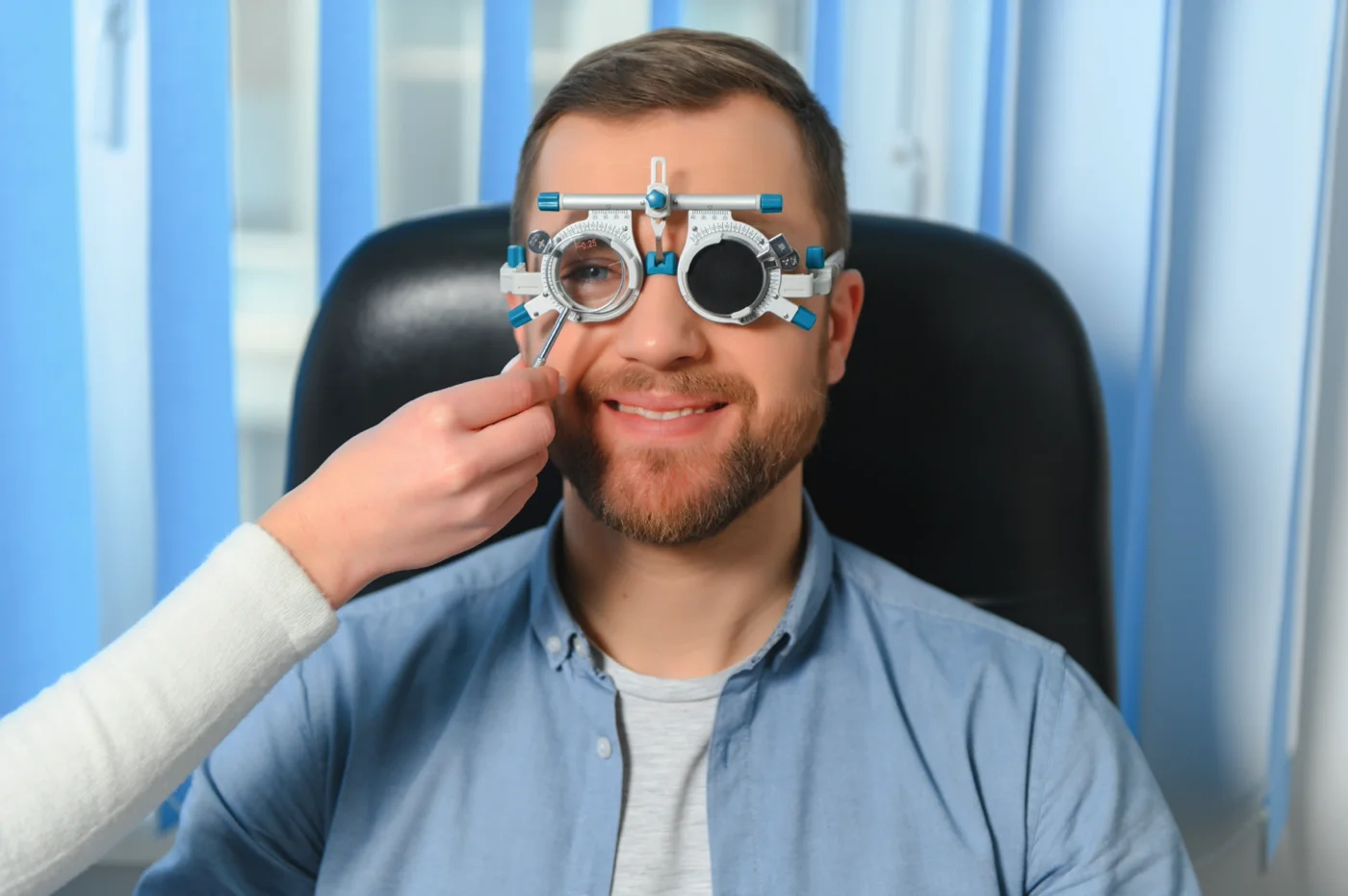
A comprehensive eye examination goes far beyond simply reading letters on a chart. An eye-health specialist will evaluate:
- Visual acuity in each eye
- Refraction of light rays to determine differences in prescriptions for precise vision
- Eye alignment and coordination
- Depth perception
- The condition of your eyes, including a look at the retina and the optic nerve
More advanced diagnostic tools identify even the subtlest imbalances. This thorough approach ensures that irregular vision doesn’t go unnoticed or get misdiagnosed.
Treatment Options for Uneven Vision
Treatment will depend on the underlying cause, the patient’s age, and the degree of irregularity. Common options take in:
Updated Prescription Glasses or Contacts
Most of the time, adjusting refractive powers will take care of uneven vision in short order.
Vision Therapy
To improve coordination between the eyes, targeted exercises can help lengthen your view even if, from time to time, this has to be suppressed by your brain.
Specialised Lenses
In some instances, prism lenses or a completely tailored prescription can help to adjust the input of visual information.
Medical or Surgical Treatment
Conditions like cataracts or retinal problems may call for medical intervention.
The right treatment for your specific needs will be given by an eye-health specialist, fitting your vision so that both eyes work comfortably together.
Uneven Vision in Children vs Adults
In Children
Because children’s skilled vision system is still developing, they are the most at risk. Learning, reading, and coordination can all suffer from uneven vision. Consequently, identifying and correcting an eye condition as soon as possible is critical to restoring proper vision, particularly in children.
In Adults
Because of prescription changes, aging, or eye disease, adults suffer uneven vision. In these cases, their brains have already adapted, and symptoms, therefore, may come on gradually.
No matter what the case, seeing eye care professionals at regular intervals is the first and best way to stop long-term problems from occurring.
Can Uneven Vision Get Worse Over Time?
Yes: Uneven vision can worsen when left untreated. The brain may keep on favoring one eye, leaving the weaker eye with even poorer function and an increased suppression. This can affect:
- The Comfort of Sight
- Balance and Coordination
- Safety in Driving
- How You Do Your Job
Better direction of treatment and earlier diagnosis can maintain current vision levels or make them better and prevent problems from getting worse in the future.
When to See an Eye Care Professional
You should schedule your eye exam if either of the following is true:
- One eye sees better than the other
- Headaches or eyestrain are frequent
- Your depth perception just doesn’t click
- You feel seeing “unbalanced.”
- It’s over a year since your last eye examination
By regularly checking in with eye care professionals, you can catch changes early and deal with them properly.
Conclusion: Balanced Vision and Healthier Eyes
Finally, unequal vision in both eyes isn’t just a nuisance. If yours is caused by a difference in prescription between the eyes, a medical condition, or even how the brain processes visual input, this imbalance could make life harder. So take care of long-term eye health and inquiring eyes; bring your eyes to a reliable ophthalmologist today.
If anything seems out of place, even subtly, the best advice is to get an eye health specialist to look at it.
Take the next step toward clearer, more relaxed vision; schedule your eye exam at a trusted eye care professional’s practice, and offer your eyes the balanced care they deserve.